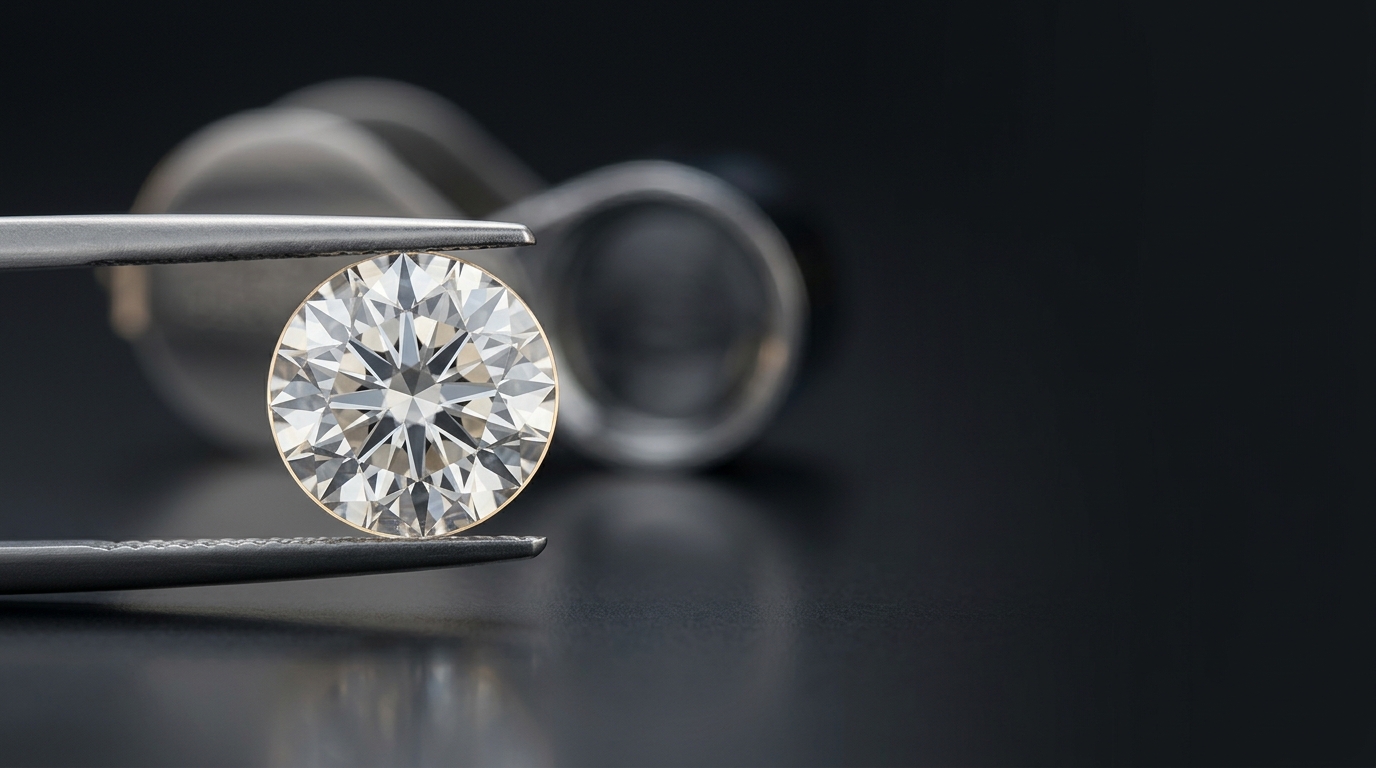
The Scientific Answer is:
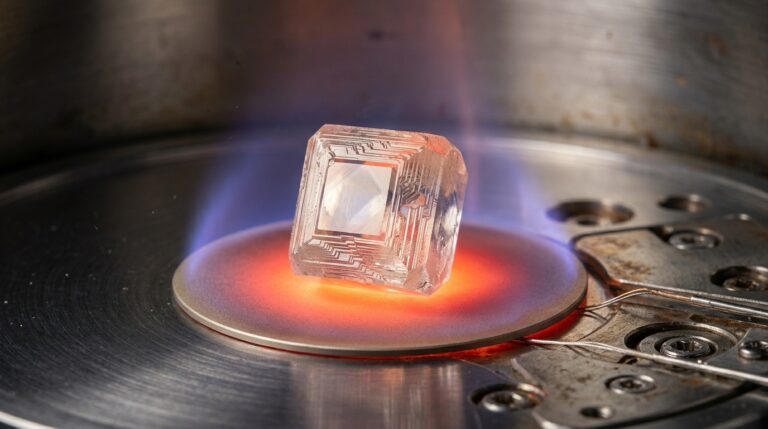
Yes! Lab-grown diamonds are 100% real. The most precise way to view them is as identical gemstones with a different beginning. They possess the exact same chemical DNA and crystal structure as stones pulled from the earth. Ultimately, ‘real’ refers to what the diamond is made of, whereas ‘mined’ merely describes its origin story.
Chemistry and Crystal Structure
True diamond is defined not by its origin, but by its anatomy—pure carbon locked in a beautifully symmetrical, cubic crystal structure. That profound atomic bond gives rise to the stone’s iconic hardness, thermal conductivity, and breathtaking sparkle. Lab-grown methods do not simulate this physics—they execute it, synthesizing the same crystalline lattice rather than a superficial substitute.
Hardness and Everyday Durability
Embracing a perfect 10 on the Mohs hardness scale, both types of diamond offer the ultimate defense against scratches. However, buyers should not mistake hardness for indestructibility. A precise blow at an unfortunate angle can chip any stone, and every fine ring is susceptible to dulling oils or setting wear. Because they share the same physical realities, caring for them requires the same mindful stewardship.
Brilliance Does Not Come From Origin
The true measure of a diamond’s visual performance lies in its craftsmanship; in other words, brilliance is engineered, not mined. A diamond’s characteristic fire, brightness, and scintillation depend entirely on its cut quality, proportions, polish, and symmetry, as well as the clarity of its surface and the ambient light. This is why a beautifully cut lab-grown diamond can easily eclipse a poorly cut mined stone. In the realm of pure sparkle, meticulous artistry always triumphs over origin.
The True Power of a Label
Though both share the identical soul of a diamond, a transparent origin remains essential to the relationship between artisan and collector. The Federal Trade Commission’s guidance champions this absolute clarity, requiring open and conspicuous disclosure because a gemstone’s beginning is a vital thread in the purchasing narrative. Ultimately, honest terminology should gracefully illuminate—rather than obscure—the unique story of how each stone came to be.
Frequently Asked Questions
Why is there confusion around the authenticity of lab-grown diamonds?
The misunderstanding occurs when consumers mistake laboratory creations for superficial simulants, or when the word “real” is misplaced to describe a stone’s origin rather than its physical substance.
Do they share the same characteristics under close inspection?
They embody the exact chemical and optical blueprint. However, their distinct growth environments introduce minor differences—such as tiny trace elements and internal growth formations—which specialized laboratories utilize to decode where the diamond was born.
Is the laboratory origin clearly disclosed on a grading report?
Without exception, world-class grading institutions ensure complete transparency by clearly designating the stone as laboratory-grown on its official report.
Key Takeaways
- “Real diamond” and “natural diamond” are not synonyms.
- Both origins share diamond’s defining material properties.
- Cut quality—not origin—is the main driver of visual performance.
- Origin must always be disclosed clearly.
Authoritative Sources
- GIA — Is There a Difference Between Natural and Laboratory-Grown Diamonds?
- GIA — Laboratory-Grown Diamonds: An Update on Identification
- U.S. Federal Trade Commission — Advertising Diamonds with Clarity
- IGI — Laboratory Grown Diamond Report
Halo Diamonds Editorial Note: Trusted independent authorities and reputable gemological institutions
must deliver precise, universally verifiable grading certificates that bring absolute transparency to every evaluation.